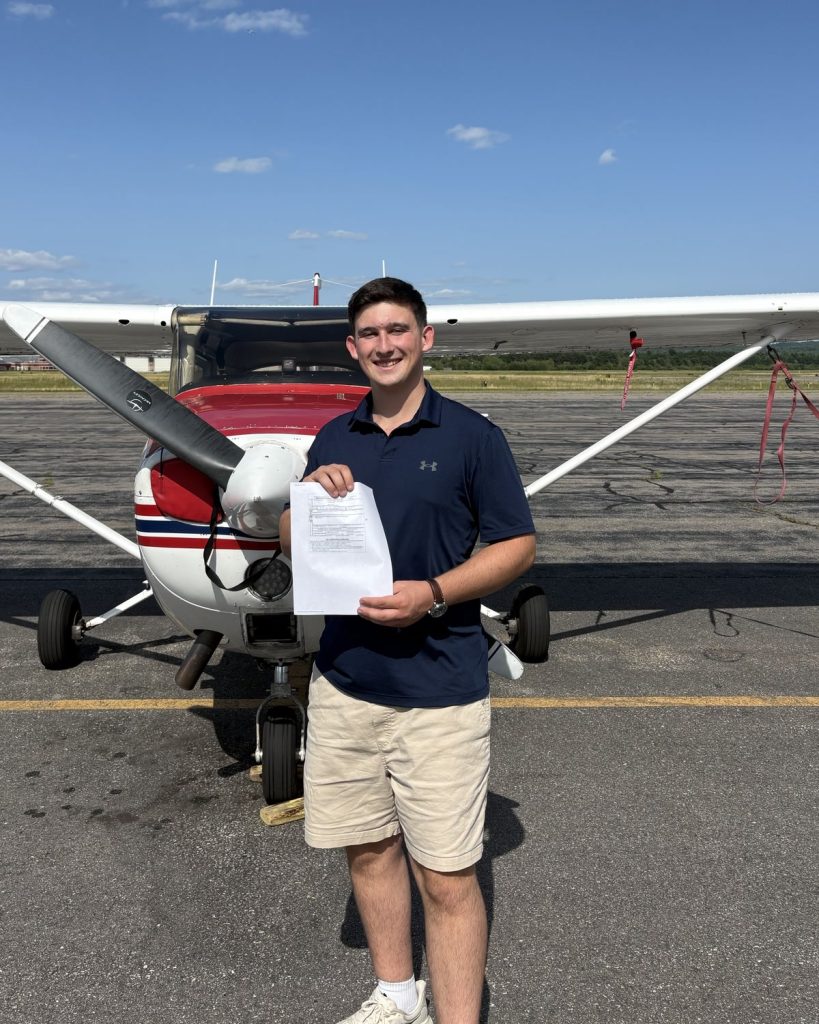
I’m David, a senior from Bedford, New Hampshire, and a private pilot. This fall I started the AFF Boot Camp at Skydive New England in Lebanon, Maine, and I’m working toward my USPA A license. This blog is my senior project. It’s where I write about what the training is like and what it costs.
Why this blog exists
When I started looking into learning to skydive, I couldn’t find a straight answer about what it costs or how long it takes. Most of what’s online about skydiving in New England comes from the dropzones themselves, and there isn’t much from independent sources, like students who are going through training right now. I had to piece it together from a lot of different websites. The price of an A license program doesn’t cover the required tandem, your USPA membership, or any jumps you repeat if you don’t pass a category the first time. It was also hard to find much about what’s specific to training here. The season closes in early November, and you have to jump at least every 30 days to stay current. If a long winter pushes back the start of the season, or you get the order wrong, you can end up paying for ground school twice. I’m writing this blog so the next student has one place to find that information.
Pilot training
I earned my private pilot certificate in July 2026. In flight training, the first rule is to always fly the airplane. If something goes wrong, you keep flying it until you’re on the ground. Skydiving is the opposite. You leave the airplane on purpose, and then you have to make decisions by set altitudes. I want to compare how pilots and skydivers are taught to handle emergencies, and where the training is similar.
What you’ll find here
- Jump Journal: Every jump and training day, with my notes.
- Research: How student skydiving works, based on the USPA Skydiver’s Information Manual and FAR Part 105.
- Interviews: Conversations with instructors and other people who work in the sport.
- Features: Longer pieces, including how pilots and skydivers train for emergencies, what an A license costs in New England, and what USPA’s incident data says about risk.
A note on safety
This is one student’s experience, not training advice. I’m still learning. If you want to skydive, learn from USPA-rated instructors at a USPA Group Member dropzone, and follow what they teach you.
Question? Get in touch.