Ground School: Learning to Leave the Airplane
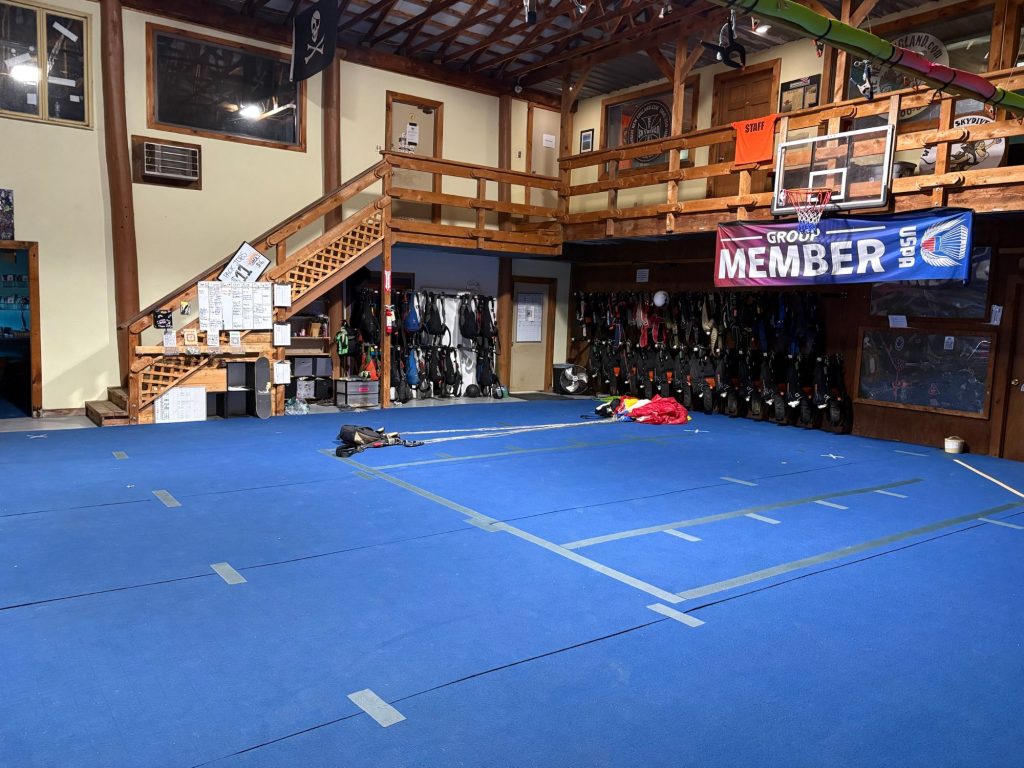
Before your first jump at Skydive New England, you spend a day on the ground. Mine was the first day of AFF Boot Camp. It covered what I’d need on my first jump: how to leave the airplane, how to fall stable, how to open the parachute, what to do when something goes wrong, and how to land.
The banner on the hangar wall says Skydive New England is a USPA Group Member. That means the dropzone has agreed to follow USPA’s Basic Safety Requirements. It’s the first thing I’d look for if I were picking a place to learn.
The classroom
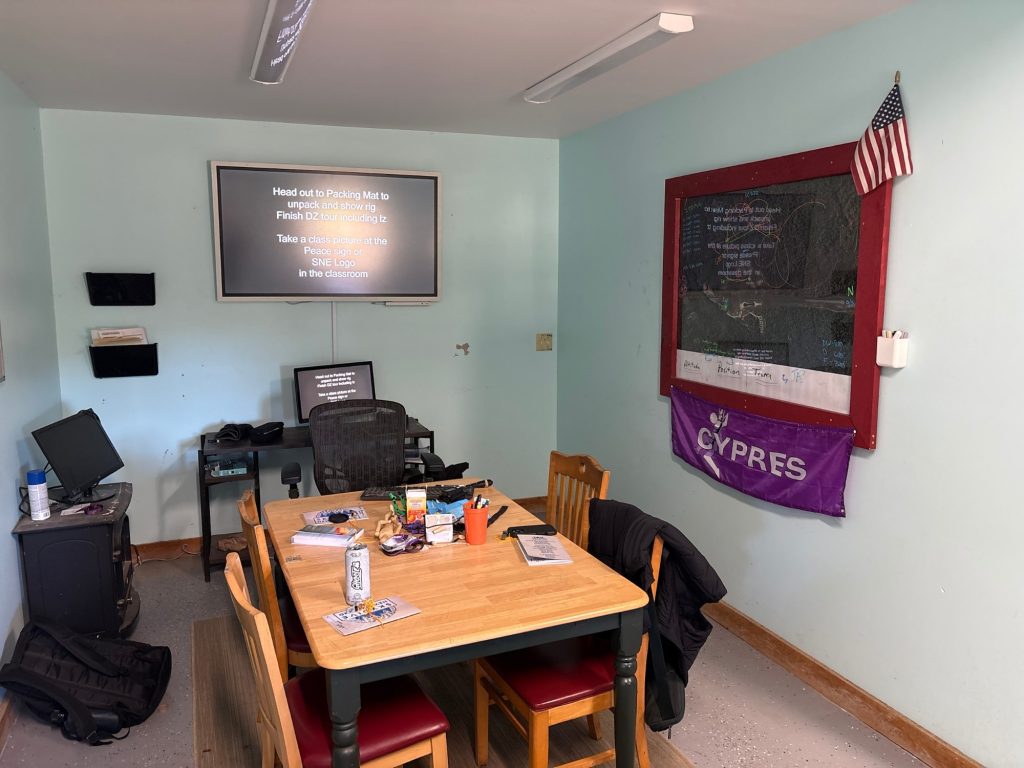
The morning started in the classroom. We went through Category A of the USPA Skydiver’s Information Manual. That’s the first stage of AFF. It covers gear, body position, altitude awareness, emergency procedures, and landing.
The whiteboard map shows the landing area with the pattern drawn on it: downwind leg at 900 feet, base at 600, final at 300. Written under the map are three words: altitude, position, traffic. That’s the order you check things once your canopy is open and flying.
This part felt familiar. My private pilot training was also built on set altitudes and a set pattern. The difference is what happens when things aren’t right. In an airplane, if the approach looks wrong, you go around. Under a canopy, there is no go-around. You fly the pattern you’ve got and land.
Exits and body position
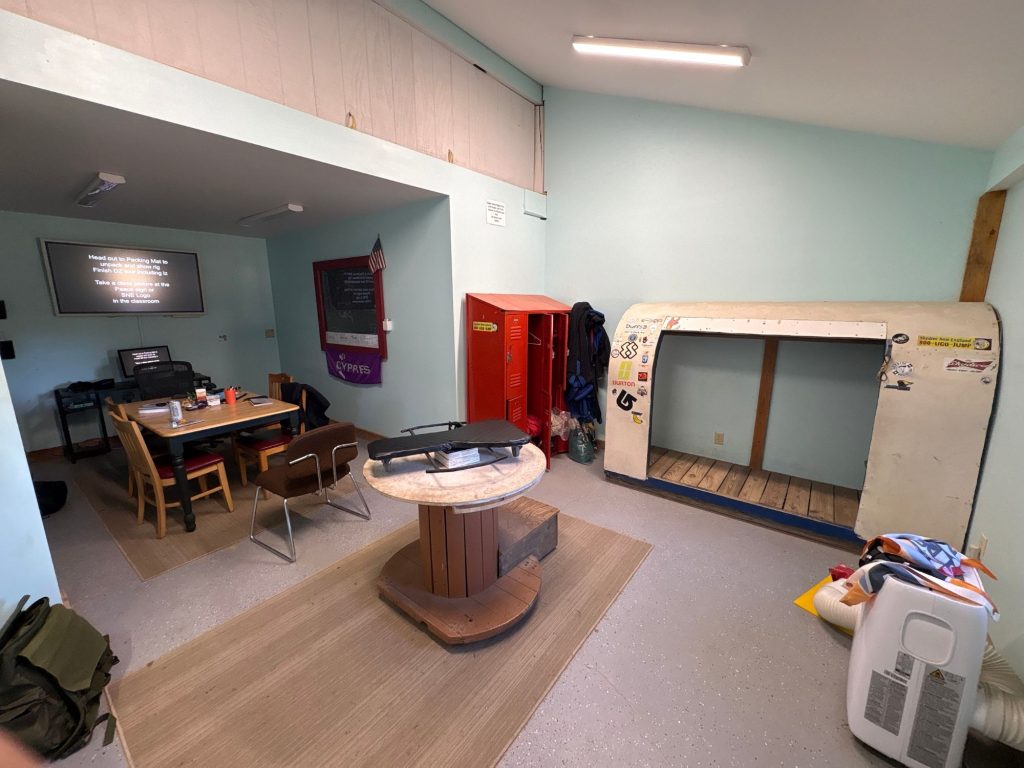
Next was the training room. The white structure on the right is a mockup of the airplane door. We practiced climbing into position and leaving it the same way every time, with the exit count said out loud.
The padded board on top of the cable spool is for body position. You lie on it belly-down and practice the arch: hips forward, head up, arms and legs out. Staying stable in freefall depends on it.
Emergency procedures
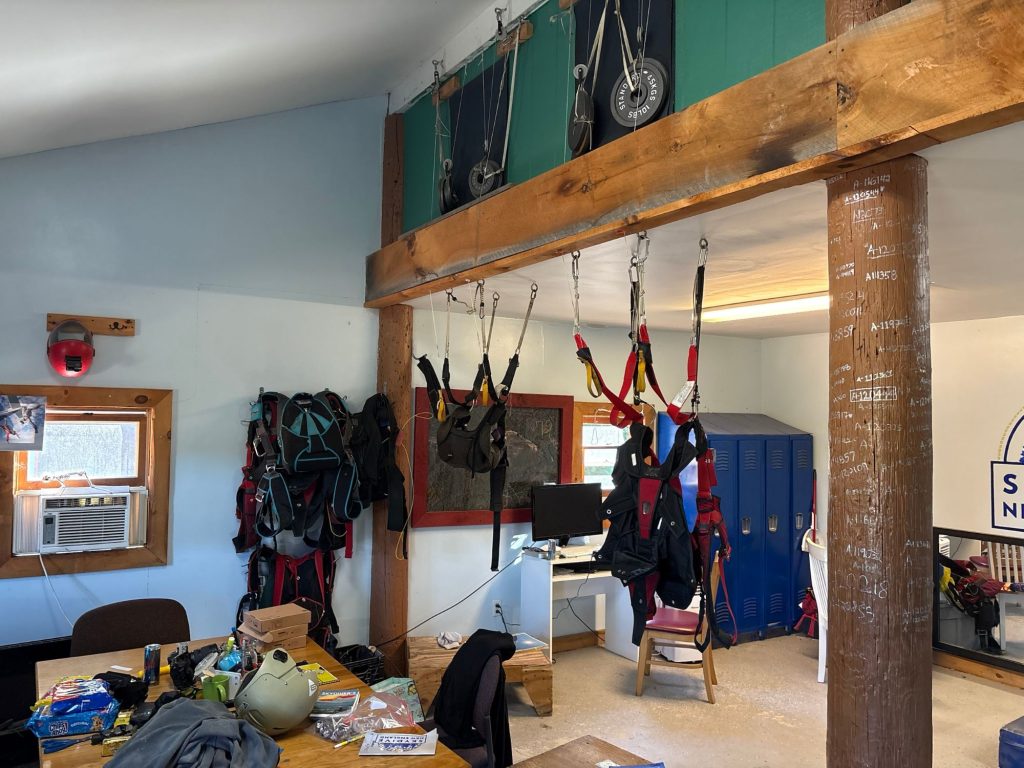
The hanging harnesses are where we practiced emergencies. You hang in a harness and run through the procedures until they’re automatic: find your handles, look, pull, and do it in the right order.
The post on the right is covered in A-license numbers written by skydivers who got their license here. That’s where I’m trying to end up.
The gear
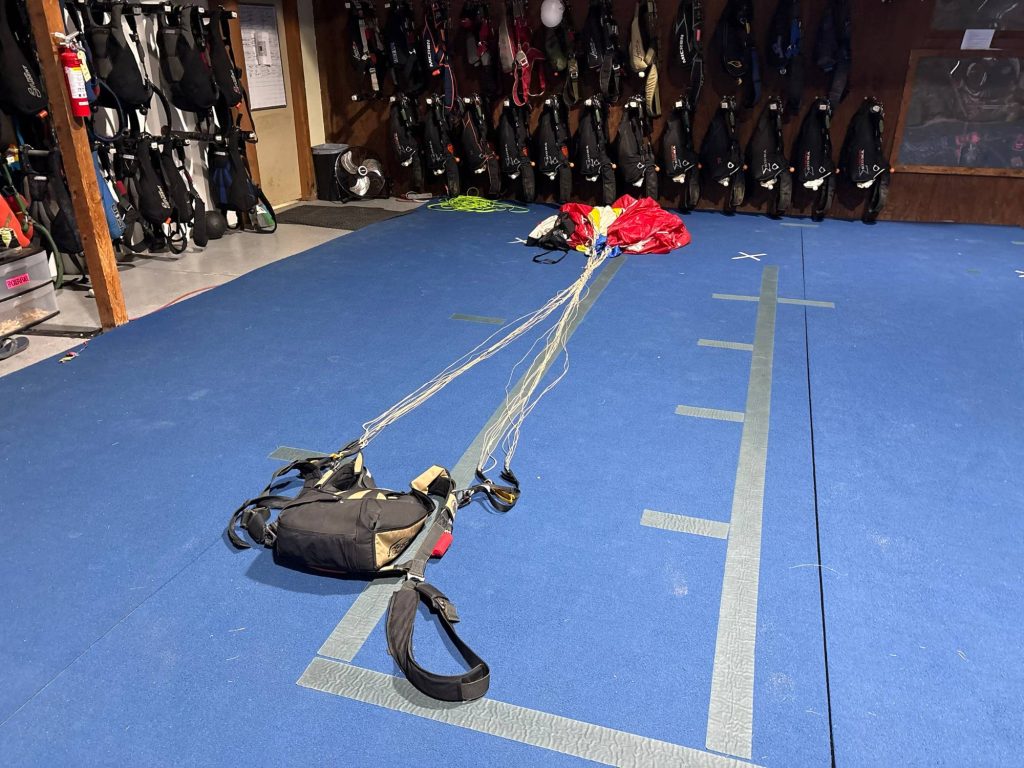
After the classroom, we went out to the packing mat. An instructor unpacked a rig so we could see the whole system laid out: canopy, lines, risers, and container.
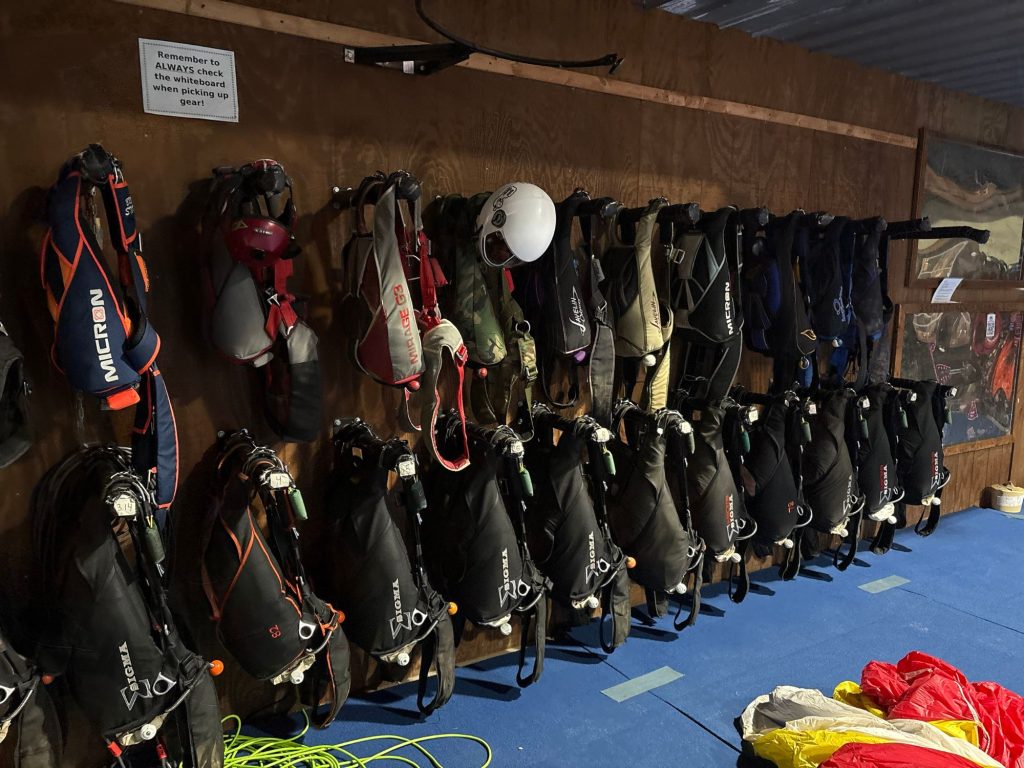
Student rigs hang on this wall. The sign says to always check the whiteboard when picking up gear. Every rig gets checked more than once before you jump, by you and by your instructors.
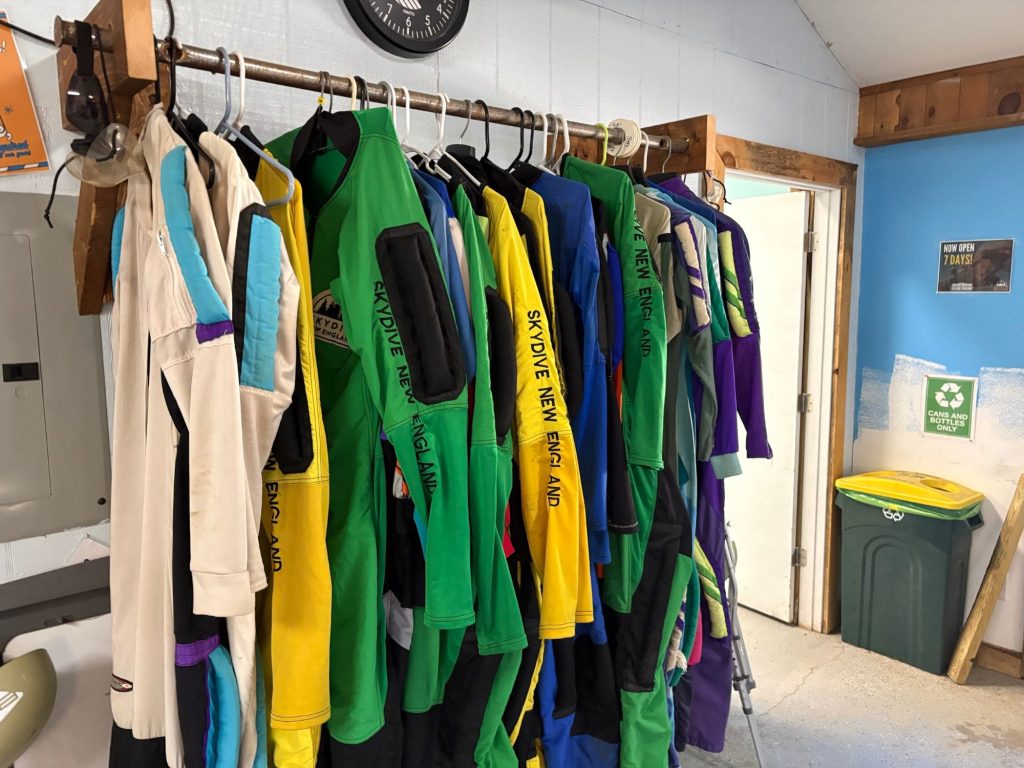
Student jumpsuits hang across the room, under a clock designed to look like an altimeter.
End of the day
The last slide on the classroom screen told us to finish the dropzone tour and take a class picture. After a full day on the ground, the next step was the airplane. That’s the next entry.
This is one student’s experience, not training advice. If you want to learn to skydive, train with USPA-rated instructors at a USPA Group Member dropzone.